
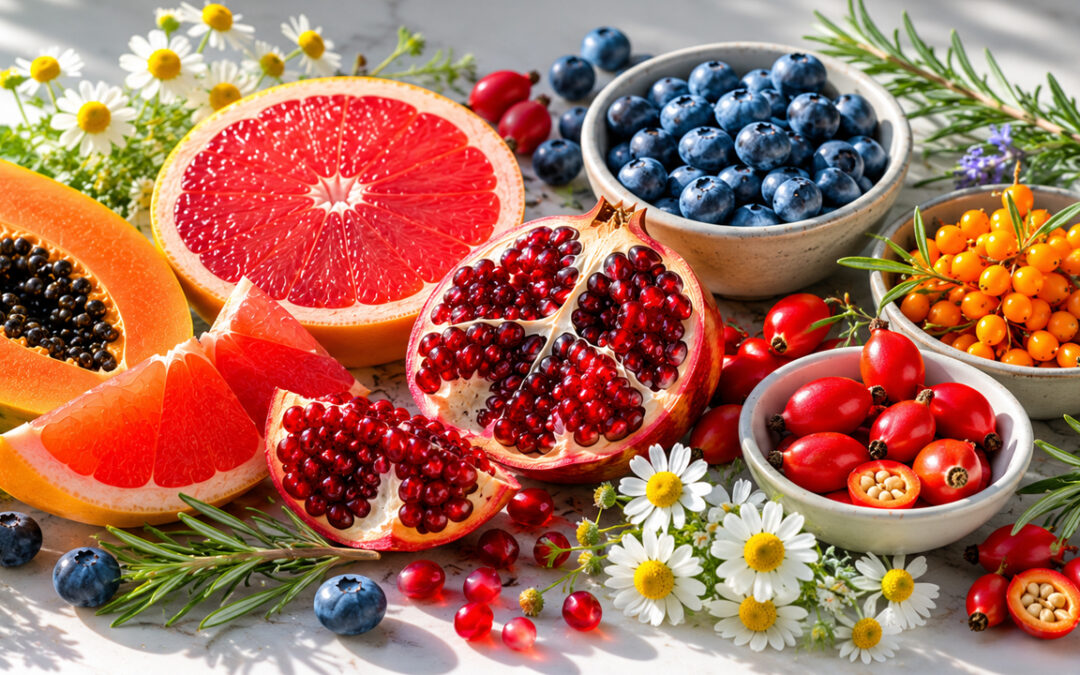
Few nutritional compounds have received as much scientific attention as antioxidants. Found naturally in colorful fruits, vegetables, herbs, teas, spices, and botanical skincare ingredients, antioxidants play an important role in protecting the body and skin from oxidative stress associated with everyday living.
Every day, the body is exposed to factors that can contribute to the formation of free radicals, including normal metabolism, ultraviolet (UV) radiation, pollution, cigarette smoke, emotional stress, poor dietary habits, and other environmental exposures. When free radicals accumulate faster than the body’s natural defenses can neutralize them, oxidative stress occurs.
Researchers continue to study the role of oxidative stress in aging and overall health, including its potential impact on the skin. Because the skin is the body’s largest organ and its first line of defense, it is continuously exposed to environmental stressors that influence how it looks, feels, and functions over time.
This growing understanding has increased interest in antioxidants from two important sources: the foods we eat and the skincare we use. Antioxidant-rich nutrition supports the body’s natural defense systems from within, while topical antioxidants support the skin where environmental exposure occurs every day.
Healthy aging and healthier-looking skin are influenced by many factors, including nutrition, lifestyle, environmental exposure, and skincare habits. Increasingly, antioxidants are recognized as an important part of a comprehensive approach to supporting overall wellness, resilience, and long-term skin health.
In this article, we explore what antioxidants are, how they work, why they matter for both health and skin, and how internal and topical antioxidants can work together to support long-term wellness.
In This Article, You’ll Learn
- What antioxidants are and how they work
- What free radicals and oxidative stress mean for health and skin
- How antioxidant-rich foods support overall wellness
- Why antioxidants have become important ingredients in modern skincare
- The difference between internal and topical antioxidant support
- Which botanical ingredients are naturally rich in antioxidants
Key Takeaways
- Antioxidants protect the body and skin from oxidative stress caused by free radicals.
- Oxidative stress is influenced by everyday factors such as UV exposure, pollution, stress, smoking, and poor dietary habits.
- Antioxidant-rich foods support overall health, healthy aging, and normal cellular function.
- The skin benefits from both internal antioxidant support through nutrition and topical antioxidant support through skincare.
- Fruits, vegetables, herbs, flowers, roots, bark extracts, and botanical oils are among nature’s richest sources of antioxidants.
- Long-term skin wellness depends on protection, nourishment, resilience, and recovery—not correction alone.
Understanding Free Radicals and Oxidative Stress
To understand why antioxidants are important, it helps to first understand free radicals and oxidative stress.
Free radicals are unstable molecules that are produced naturally within the body as part of normal metabolism. They are also generated through everyday exposures such as ultraviolet (UV) radiation, air pollution, cigarette smoke, environmental toxins, emotional stress, poor dietary habits, and other lifestyle factors.
In small amounts, free radicals are a normal part of human biology. The body is designed to manage them through its natural antioxidant defense systems. Problems may arise when free radicals accumulate faster than the body can neutralize them, creating an imbalance known as oxidative stress.
Oxidative stress is not a disease, but rather a natural biological process that occurs when free radicals outnumber the body’s available antioxidant defenses. Researchers continue to study its role in aging and overall health because prolonged oxidative stress may influence cells and tissues throughout the body over time.
The skin is particularly vulnerable because it is continuously exposed to the outside environment. Daily contact with sunlight, pollution, climate fluctuations, and other environmental stressors may contribute to oxidative stress within the skin. Researchers continue to explore how these exposures may influence visible signs of skin aging, skin comfort, barrier function, and overall skin appearance.
Importantly, oxidative stress is not caused by a single factor. It reflects the combined effects of many aspects of modern life, including environmental exposures, nutrition, sleep quality, stress levels, physical activity, and personal care habits.
This broader perspective helps explain why supporting the body’s natural antioxidant defenses requires a comprehensive approach. Healthy lifestyle choices, antioxidant-rich foods, effective stress management, quality sleep, and thoughtfully formulated skincare all play important roles in helping support long-term health and healthier-looking skin.
Rather than focusing on eliminating every source of oxidative stress—which is neither realistic nor possible—the goal is to support the body’s natural ability to maintain balance, resilience, and recovery in an increasingly demanding environment.
What Are Antioxidants?
Antioxidants are naturally occurring compounds that protect the body from oxidative stress caused by free radicals. They are found in a wide variety of foods, including fruits, vegetables, herbs, spices, nuts, seeds, and teas, as well as in many botanical ingredients used in skincare.
Under normal circumstances, the body maintains a balance between free radicals and antioxidants. However, when free radicals accumulate faster than the body’s natural defenses can neutralize them, oxidative stress occurs.
Antioxidants support the body’s natural defense systems by neutralizing free radicals and helping maintain this important balance. Because every cell in the body is exposed to oxidative processes, antioxidants are considered important for overall health, healthy aging, and normal cellular function.
Nature provides an extraordinarily wide variety of antioxidants, majority of which belong to families of plant compounds such as polyphenols, flavonoids, carotenoids, anthocyanins, and other phytonutrients. These compounds are responsible for many of the vibrant colors found in fruits, vegetables, flowers, herbs, and botanical extracts.
While antioxidants are often discussed in relation to nutrition, they have also become important ingredients in modern skincare. Just as antioxidant-rich foods support the body from within, topical antioxidants support the skin against the environmental stressors it encounters every day.
This growing appreciation for antioxidants reflects a broader understanding that long-term wellness and healthier-looking skin are influenced not by a single ingredient or product, but by the ongoing balance between protection, nourishment, and the body’s natural ability to adapt to daily stressors.
Why Antioxidants Matter for Overall Health
Antioxidants are often associated with skincare, but their importance extends far beyond the skin. Every organ, tissue, and cell in the body is exposed to oxidative processes that occur as a normal part of life. This is one reason antioxidants have become an important area of interest in nutrition, healthy aging, and overall wellness.
The body has its own sophisticated antioxidant defense systems that work continuously to help maintain balance and protect against oxidative stress. However, these natural defenses are influenced by many factors, including age, diet, lifestyle habits, environmental exposures, physical activity, sleep quality, and stress levels.
Researchers continue to explore the role antioxidants may play in supporting normal cellular function and long-term health. While antioxidants are not a cure or guarantee against disease, they are widely recognized as an important part of a healthy lifestyle and balanced diet.
Many antioxidant-rich foods also contain vitamins, minerals, fiber, healthy fats, and other beneficial plant compounds that work together to support overall wellness. This is one reason health experts consistently encourage diets rich in fruits, vegetables, legumes, herbs, spices, nuts, seeds, and other plant-based foods.
Colorful plant foods are especially valued because they often contain naturally occurring compounds such as polyphenols, flavonoids, carotenoids, anthocyanins, and other phytonutrients. These compounds contribute not only to the vibrant colors of many plants but also to their antioxidant activity.
A wide variety of foods provide antioxidant support, including berries, leafy greens, citrus fruits, pomegranates, tomatoes, carrots, sweet potatoes, green tea, herbs, spices, and many traditional botanicals that have been valued for generations.
Perhaps most importantly, antioxidants remind us that health is rarely influenced by a single nutrient or ingredient. Long-term wellness is shaped by the combined effects of nutrition, physical activity, sleep, stress management, environmental factors, and other daily choices that help support the body’s natural ability to maintain balance and resilience over time.
This holistic perspective is increasingly reflected in modern wellness approaches that recognize the close relationship between overall health and skin health. After all, the skin is not separate from the body—it is a reflection of it.
Internal Antioxidants: The Foods We Eat
One of the most important ways to support the body’s natural antioxidant defenses is through a diet rich in plant-based foods. Fruits, vegetables, legumes, herbs, spices, nuts, seeds, teas, and other botanicals contain thousands of naturally occurring compounds that help support overall health and wellness.
Unlike isolated nutrients, whole foods provide a complex combination of vitamins, minerals, fiber, healthy fats, and phytonutrients that work together within the body. Many of these compounds possess antioxidant properties and contribute to the health benefits associated with diets rich in diverse plant foods.
Colorful fruits and vegetables are among nature’s richest sources of antioxidants. The vibrant reds, blues, purples, oranges, yellows, and greens found in many plants often reflect the presence of beneficial compounds such as polyphenols, flavonoids, carotenoids, and anthocyanins. These naturally occurring substances protect plants from environmental stress while also contributing to their nutritional value.
Many foods recognized for their antioxidant content have long been valued in traditional diets around the world. Berries, pomegranates, citrus fruits, leafy greens, tomatoes, carrots, sweet potatoes, herbs, spices, green tea, and other plant foods provide a diverse range of beneficial compounds that contribute to a balanced and nutrient-rich diet.
Research continues to explore how antioxidant-rich dietary patterns support healthy aging, normal cellular function, cardiovascular health, cognitive health, immune function, and overall wellness. While no single food can provide everything the body needs, a varied diet rich in plant foods provides a broad spectrum of nutrients and protective compounds that work together to support long-term health.
Because the skin is part of the body, it may also benefit from the same healthy lifestyle habits that support overall wellness. This growing understanding has strengthened interest in the relationship between nutrition and skin health. Increasingly, researchers recognize that healthier-looking skin may be influenced not only by skincare products, but also by the foods we eat, the quality of our sleep, our stress levels, physical activity, and other lifestyle factors that contribute to overall health.
For a deeper exploration of how nutrition, sleep, exercise, and stress influence skin wellness, see Nutrition and Skin Health: How Diet, Sleep, Exercise, and Stress Influence Healthy Skin.
Many traditional botanicals are also valued for their naturally occurring antioxidant content. Ingredients such as rosemary, green tea, amalaki fruit, and berries provide a diverse range of plant compounds that continue to attract scientific interest for their antioxidant activity and broader wellness-supportive properties.
Perhaps most importantly, antioxidants remind us that wellness is built through consistent daily choices rather than a single food, supplement, or ingredient. Long-term health is supported by a combination of balanced nutrition, physical activity, quality sleep, stress management, and other habits that help the body maintain balance and resilience over time.
While internal antioxidants support the body’s natural defenses from within, the skin also faces daily exposure to sunlight, pollution, climate fluctuations, and other environmental stressors. This is one reason topical antioxidants have become an important part of modern skincare in a complementary role for a healthier-looking skin.
The Role of Antioxidants in Skin Health
The skin is often viewed primarily as a cosmetic feature, but it is also the body’s largest organ and one of its most important protective systems. Every day, the skin serves as a barrier between the body and the outside environment, helping defend against physical, environmental, and biological stressors.
Because of its constant exposure to the external world, the skin is particularly vulnerable to oxidative stress. Ultraviolet (UV) radiation, air pollution, cigarette smoke, climate fluctuations, and other environmental factors contribute to the formation of free radicals within the skin. Over time, researchers believe these exposures influence how the skin looks, feels, and functions.
Oxidative stress is increasingly associated with visible skin concerns such as dullness, dryness, uneven-looking skin tone, loss of radiance, and the appearance of premature skin aging. Researchers also continue to explore how oxidative stress may influence skin comfort, barrier function, and the skin’s ability to adapt to environmental challenges.
However, healthy-looking skin is influenced by far more than what is applied topically. Nutrition, sleep quality, stress levels, physical activity, hydration, and overall health all affect the skin’s appearance and resilience. This growing understanding has helped shift skincare conversations beyond surface-level treatments and toward a more holistic view of skin wellness.
Environmental exposures also contribute to oxidative stress within the skin. To learn more, see The Hidden Environmental Factors: How They Affect Skin Health.
Antioxidants play an important role within this broader context. Antioxidant-rich foods support the body’s natural defenses from within, while topical antioxidants support the skin where environmental exposure occurs every day. Together, they provide complementary forms of support that reflect the close relationship between overall health and skin health.
Increasingly, experts recognize that healthy-looking skin depends not only on correction and treatment, but also on protection, nourishment, resilience, and long-term support. Antioxidants have become an important part of this approach because they support the body’s and skin’s natural ability to respond to the demands of modern life.
This is why discussions about antioxidants now extend beyond nutrition alone. Understanding the difference between internal and topical antioxidants provides valuable insight into how both work together to support overall wellness and healthier-looking skin.
Nature’s Most Powerful Botanical Antioxidants
Nature is one of the richest sources of antioxidants. To survive sunlight, environmental stress, climate fluctuations, and other challenges, plants have evolved sophisticated protective systems that rely on a wide variety of naturally occurring compounds. Many of these same compounds have become increasingly valued in nutrition, wellness, and skincare for their antioxidant properties.
These plant-derived compounds include polyphenols, flavonoids, carotenoids, anthocyanins, and other phytonutrients that contribute to the vibrant colors, aromas, and protective functions found throughout the plant kingdom. While all plants contain beneficial compounds, some are particularly recognized for their rich antioxidant content.
Fruit-Derived Antioxidants
Many fruits are naturally abundant in antioxidant compounds that protect the plant while contributing to its nutritional value.
Examples include:
- Goji Berry
- Açaí Berry
- Bilberry
- Cranberry
- Grapefruit
- Rosehip
- Amalaki/Amla (Indian Gooseberry)
These fruits contain a diverse range of phytonutrients, including polyphenols, flavonoids, anthocyanins, and vitamin C-related compounds that continue to attract scientific interest for their antioxidant activity and broader wellness-supportive properties.
Herbal and Botanical Antioxidants
Many herbs, leaves, roots, and bark extracts have long been valued in traditional wellness systems and continue to be studied today for their naturally occurring antioxidant compounds.
Examples include:
- Sage
- Thyme
- Rosemary
- Green Coffee
- Ashwagandha
- Mediterranean Marine Pine Bark
These botanicals contain diverse plant compounds that contribute to their growing popularity in both nutritional and skincare applications.
Floral Antioxidants
Flowers contain delicate yet remarkably complex phytonutrients that protect the plant from environmental stress while contributing to their unique characteristics.
Examples include:
- Rose
- Arnica
- Lavender
- Calendula
- Chamomile
- Helichrysum
These floral botanicals are widely appreciated in skincare for their ability to support skin comfort, balance, and overall skin wellness.
Antioxidant-Rich Botanical Oils
Certain botanical oils provide more than essential fatty acids alone. Many also contain naturally occurring antioxidant compounds that support skin nourishment and barrier resilience.
Examples include:
- Jojoba
- Tamanu
- Green Tea
- Rosehip Seed
- Green Tea Seed
- Sea Buckthorn Berry
These oils are valued for their unique combination of beneficial lipids, antioxidant compounds, and skin-supportive nutrients that contribute to healthier-looking skin.
The remarkable diversity of antioxidants found throughout nature highlights an important principle: no single fruit, herb, flower, root, bark extract, or oil provides every beneficial compound. Different plants contribute different phytonutrients, which is why both nutrition and skincare often benefit from botanical diversity rather than reliance on a single ingredient.
This understanding has helped shape modern approaches to skincare, where carefully selected botanical ingredients are combined to support healthier-looking skin through nourishment, protection, resilience, and long-term skin wellness.
Conclusion
Antioxidants have become an important part of conversations about health, healthy aging, and skin wellness because they support the body’s natural ability to respond to the oxidative challenges of everyday life. From environmental exposures and lifestyle factors to the normal processes of aging, the body and skin are continuously adapting to influences that can affect long-term health and resilience.
Viewed through this broader perspective, antioxidants are not simply individual nutrients or skincare ingredients. They are part of a larger network of protective mechanisms that support balance throughout the body. Whether obtained through antioxidant-rich foods or thoughtfully formulated skincare, these compounds contribute to an approach that emphasizes support, nourishment, and long-term wellness rather than short-term correction alone.
Perhaps the most important takeaway is that antioxidants are most effective when viewed as part of a larger commitment to overall health and skin wellness. Nutritious food, restorative sleep, regular physical activity, effective stress management, environmental awareness, and antioxidant-rich skincare each contribute to the body’s natural capacity for protection, recovery, and resilience. Together, they support healthier aging and healthier-looking skin while reinforcing one of nature’s most important principles: long-term wellness is built through consistent support, not a single ingredient, product, or solution.
The Blue Beautifly Antioxidant Philosophy
At Blue Beautifly, antioxidant-rich whole-plant ingredients are at the heart of our formulation philosophy. We believe nature provides an extraordinary diversity of botanical compounds that support the skin’s natural defenses against oxidative stress while contributing to healthier-looking skin. This belief shapes how we formulate our products and guides our approach to long-term skin wellness.
Rather than relying on a single ingredient or short-term trends, we focus on combining a diverse range of antioxidant-rich fruits, flowers, herbs, roots, bark extracts, hydrosols, and botanical oils. We believe nature’s strength lies in its diversity, and that different plants contribute different phytonutrients that support the skin in complementary ways.
A defining part of our approach is our commitment to creating all of our botanical extracts in-house. By carefully crafting our own extracts, we maintain greater control over quality, purity, concentration, and freshness while preserving the integrity of the plants we use. This process reflects our commitment to ingredient transparency and to creating skincare that is USDA Organic, vegan, gluten-free, and rooted in the power of whole-plant ingredients.
All of the botanicals used throughout our formulations contain naturally occurring antioxidant compounds. Ingredients such as goji berry, açaí berry, amalaki, rosemary, green coffee, Mediterranean marine pine bark, chamomile, calendula, rose, sea buckthorn, rosehip, and green tea seed oil reflect our belief that nature offers a remarkable variety of plant compounds that support healthier-looking skin through nourishment, balance, resilience, and long-term skin wellness.
We also recognize that skincare is only one part of a larger picture. Nutrition, sleep, stress management, physical activity, and environmental factors all contribute to overall wellness and influence how the skin looks and feels. This understanding reflects our belief that caring for the skin should work in harmony with caring for the whole person.
For us, antioxidants represent more than a skincare trend. They reflect a deeper appreciation for the remarkable ways plants protect themselves and how thoughtfully formulated botanical skincare supports healthier-looking skin over time. By combining antioxidant-rich botanicals with sustainable practices, ingredient integrity, and a commitment to whole-plant formulation, we strive to create products that remain true to the principles of conscious, nature-inspired skincare.
Frequently Asked Questions
What are free radicals?
Free radicals are unstable molecules produced through normal metabolic processes and environmental exposures such as UV radiation, pollution, cigarette smoke, and other stressors. When free radicals accumulate faster than the body’s natural defenses can neutralize them, oxidative stress occurs.
Why are antioxidants important for skin health?
The skin is continuously exposed to environmental stressors that contribute to oxidative stress. Antioxidants support the skin’s natural defenses and are often included in skincare products designed to support healthier-looking skin.
Can antioxidant-rich foods benefit the skin?
Healthy-looking skin is influenced by many factors, including nutrition. Antioxidant-rich foods provide beneficial plant compounds that support overall wellness, which also contributes to skin health as part of a balanced lifestyle.
What foods are naturally rich in antioxidants?
Many fruits, vegetables, herbs, spices, legumes, nuts, seeds, and teas contain antioxidant compounds. Examples include berries, pomegranates, leafy greens, citrus fruits, green tea, and rosemary.
Are topical antioxidants as important as dietary antioxidants?
Internal and topical antioxidants serve different but complementary roles. Antioxidant-rich foods support the body’s natural defenses from within, while topical antioxidants support the skin where daily environmental exposure occurs.
Which botanical ingredients are rich in antioxidants?
Many botanical ingredients contain naturally occurring antioxidant compounds, including goji berry, açaí berry, amalaki, rosemary, green coffee, Mediterranean marine pine bark, chamomile, calendula, rose, sea buckthorn, rosehip, and green tea seed oil.
Is one antioxidant better than another?
Different antioxidants provide different plant compounds and support the body and skin in different ways. This is one reason many experts encourage variety in both nutrition and skincare rather than relying on a single ingredient.
Supporting Skin Wellness with Antioxidant-Rich Skincare
Antioxidants play an important role in supporting both overall health and skin wellness. While antioxidant-rich foods nourish the body from within, thoughtfully formulated skincare supports the skin where daily environmental exposure occurs.
At Blue Beautifly, we formulate with antioxidant-rich fruits, flowers, herbs, roots, bark extracts, hydrosols, and botanical oils to support healthier-looking skin through nourishment, balance, and resilience. Our USDA Organic, vegan, and gluten-free formulations are crafted with botanical extracts made in-house to ensure quality, purity, and freshness.
Explore our Blue Beautifly collection of antioxidant-rich skincare and discover how nature-inspired formulations can become part of your long-term approach to skin wellness.
Related Articles
- Nutrition and Skin Health: How Diet, Sleep, Exercise, and Stress Influence Healthy Skin
- The Hidden Environmental Factors: How TheyAffect Skin Health
- The Skin Barrier: The Foundation of Healthy, Resilient Skin
- The Pursuit of Healthy Skin: Why Balance Matters More Than Perfection
References
- Rinnerthaler M, Bischof J, Streubel MK, Trost A, Richter K. Oxidative stress in aging human skin. Biomolecules. 2015;5(2):545–589. doi:10.3390/biom5020545.
- Krutmann J, Bouloc A, Sore G, Bernard BA, Passeron T. The skin aging exposome. Journal of Dermatological Science. 2017;85(3):152–161. doi:10.1016/j.jdermsci.2016.09.015.
- Dijkhoff IM, Drasler B, Karakocak BB, Petri-Fink A, Valacchi G, Eeman M, Rothen-Rutishauser B. Impact of airborne particulate matter on skin: A systematic review from epidemiology to in vitro studies. Particle and Fibre Toxicology. 2020;17(1):35. doi:10.1186/s12989-020-00366-y.
- Petruk G, Del Giudice R, Rigano MM, Monti DM. Antioxidants from plants protect against skin photoaging. Oxidative Medicine and Cellular Longevity. 2018;2018:1454936. doi:10.1155/2018/1454936.